


7 Haptic Feedback Truths for Retro Shooters
Last Updated: October 25, 2026
Quick Summary
Yes, haptic feedback is worth it for retro shooters, with one condition: you value feel over function. Haptics won't improve your score, but they make every trigger pull more satisfying, and for a hobby built on nostalgia and immersion, that's the whole point.
Haptic feedback is a broad category of touch response, while rumble is one specific, older type of it.
Most retro shooters send a single rumble channel, so a shotgun and a pistol often feel identical.
Start at medium vibration intensity, since max settings on a light gun with a recoil mod can loosen fittings.
Stronger vibration drains battery faster, so medium intensity is the sensible default for marathon arcade nights.
For retro shooters, a recoil mod beats a fancy controller almost every time.
Table of Contents
What Haptic Feedback Actually Does in a Retro Shooter
Haptic Motors, Waveforms, and Tactile Feedback Explained
Haptic Feedback vs Rumble: What's the Real Difference?
PS5 Controller Haptics on PC: Worth the Setup for Retro Shooters?
Best Controller Settings for Retro Shooters with Haptics
A Repeatable Test You Can Run in Ten Minutes
Vibration Intensity and Battery Drain Trade-offs
Accessibility and Comfort Settings
Retro Light Gun Vibration: What to Expect from Your Hardware
How Game Implementation and Genre Affect the Experience
What Retro Shooters Actually Send
Genre-by-Genre: Where Haptics Help and Where They Distract
Gameplay Impact Versus Immersion
Is Haptic Feedback Worth It? A Value-for-Money Verdict
Upgrade Your Retro Shooter Setup with Tcarterdesigns
Frequently Asked Questions
What Haptic Feedback Actually Does in a Retro Shooter
Haptic feedback is the physical response a controller gives you when something happens in a game: a jolt when you fire, a rumble when you take a hit, a subtle tick when you reload. For retro shooters, that split-second of touch is the difference between watching the action and feeling it.
Here's the short answer up front: haptics won't make you a better shot. They make the shot more fun. That's a low bar to clear and a surprisingly big win.
Haptic Motors, Waveforms, and Tactile Feedback Explained
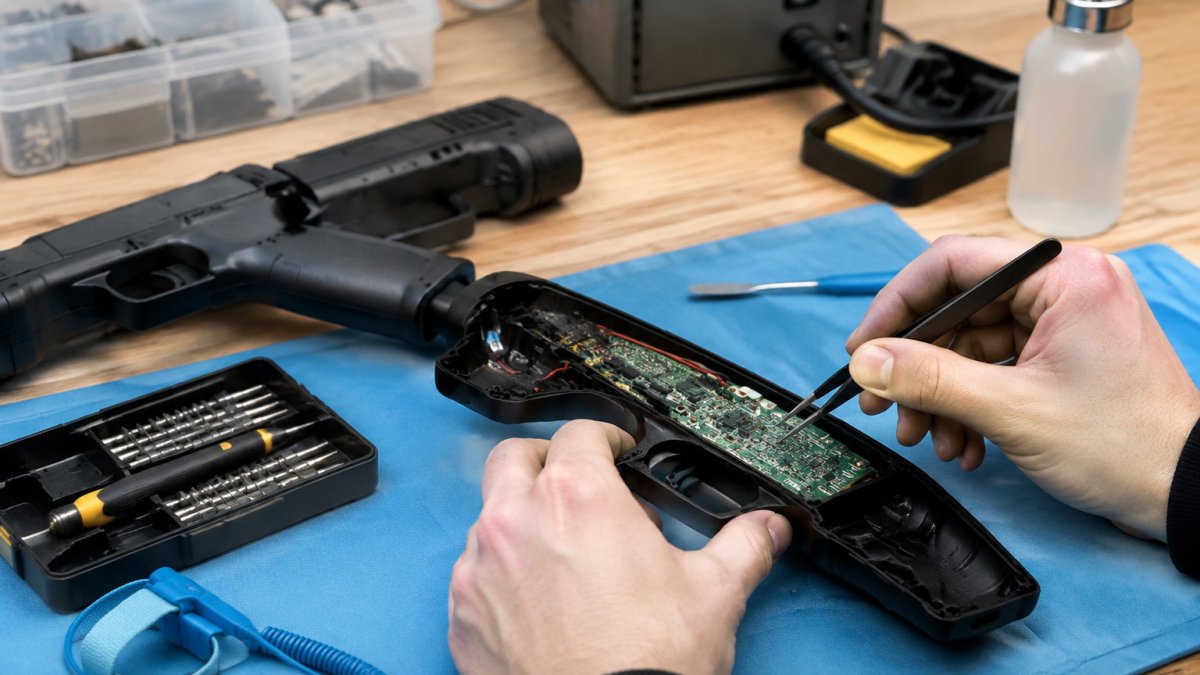
Inside most controllers sit small motors that spin a weighted mass. That spin is what you feel as vibration. Better hardware swaps the spinning motor for a voice-coil actuator that moves a tiny weight back and forth.
The difference matters. A basic motor can only buzz. A good actuator can whisper.
Rumble: one motor, one speed, one feeling
Haptics: many motors, many speeds, many feelings
Tactile feedback: the catch-all term for anything you feel through your hands
If you want to go deeper on adding recoil and tactile response to a light gun, our guide on how to mod a Sinden light gun walks through the hardware side.
Haptic Feedback vs Rumble: What's the Real Difference?
Haptic feedback is a broad category of touch response, while rumble is one specific, older type of it. Rumble shakes the whole controller.
Think of rumble as a drumbeat and haptics as a full drum kit. Rumble tells you "something happened." Haptics tell you what happened and where.
In practice, most retro shooters were built before haptics existed. So the game sends a simple rumble signal, and your fancy controller translates it into a plain buzz.
That's not a reason to skip haptics. It's a reason to set your expectations correctly.
PS5 Controller Haptics on PC: Worth the Setup for Retro Shooters?
Setting up PS5 controller haptics on PC is worth it only if your emulator or front-end passes the haptic signal through. Many don't.
Here's what actually happens on a typical retro shooter setup:
Windows sees the controller and treats it as a standard gamepad
The game sends rumble commands in the old format
The controller plays them back as basic vibration, not fine haptics
Adaptive trigger resistance usually stays off unless a tool explicitly enables it
So the setup cost, extra software, and cable management buy you a nicer-feeling rumble, not true next-gen haptics. For most retro shooters, that's a fair trade if you already own the controller. It's a poor reason to buy one.
If you're customizing your whole setup, our light gun modding guide covers the broader build.
Best Controller Settings for Retro Shooters with Haptics
Most retro shooters send a single rumble channel, so the goal isn't to unlock fancy haptics, it's to make the one signal you get feel right without wrecking your aim or your battery. Start at medium intensity, then tune per game and per controller.
A practical starting point:
Vibration intensity: medium. Max settings on a light gun with a recoil mod can loosen fittings over long sessions.
Trigger resistance: light or off. Rapid fire on a heavy trigger gets tiring fast.
Haptic strength: match the game's own feedback rather than overdriving it through third-party software.
Per-game profiles: save one for each shooter you play most, since emulators and front-ends often reset defaults.
A Repeatable Test You Can Run in Ten Minutes
Rather than trusting a general opinion, test the same three things across your library:
Pick three weapons, a pistol, a shotgun, and a rapid-fire weapon, and fire each for thirty seconds.
Note what you feel: is the pistol distinct from the shotgun, or does everything buzz the same?
Check aim drift: does strong vibration push your aim off target during sustained fire?
Time a battery check: note the percentage drop after a fixed session at medium versus max.
A common pattern is that retro shooters fail step two, one generic buzz for every weapon, which tells you the game, not your controller, is the limiting factor. That's useful information before you spend on hardware.
Vibration Intensity and Battery Drain Trade-offs
Stronger vibration drains battery faster. That's the honest trade. A controller running heavy haptics on a long session will need a charge sooner than one set to medium. If you play marathon arcade nights, medium intensity is the sensible default. Crank it up for short sessions where feel matters more than runtime.
Pro Tip If you play with headphones and rely on audio cues for enemy direction, consider lowering vibration intensity, strong rumble can mask the subtle controller feedback you'd otherwise use to confirm a hit.
Accessibility and Comfort Settings
Repeated vibration isn't comfortable for everyone. Most controllers and emulator front-ends let you:
Lower overall intensity without disabling feedback entirely
Disable individual effects where the software exposes them
Turn vibration off per game while keeping it on elsewhere
Switch to audio or visual hit confirmation if touch feedback is distracting
If you find constant vibration uncomfortable, that's a legitimate reason to play with it off, the games were designed before haptics existed, so nothing is lost mechanically.
Retro Light Gun Vibration: What to Expect from Your Hardware
Retro light gun vibration ranges from a gentle pulse to a sharp recoil kick, depending on the gun and the mods inside it. Stock guns usually give you a light rumble.

What to expect, honestly:
Stock light guns: light, steady rumble tied to firing
Modded guns with recoil: a physical kick that mimics the weapon
Custom shells: the feel depends on weight and balance, not just the motor
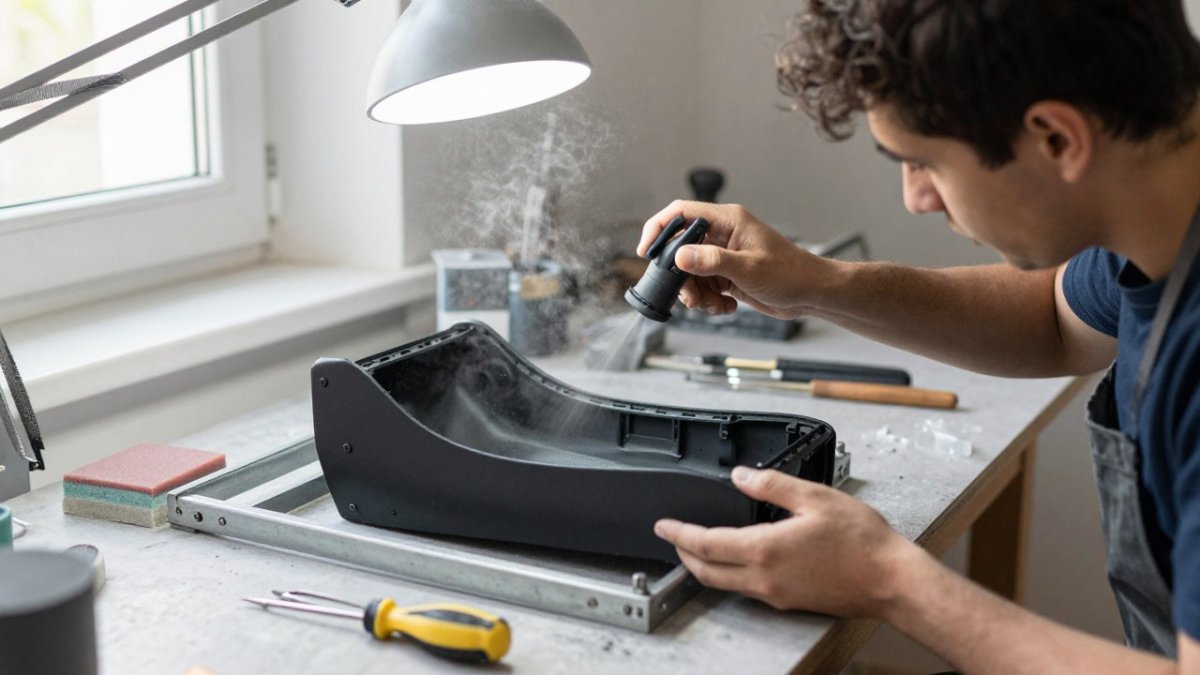
The tactile side of a mod matters as much as the electronics. A heavier, well-balanced shell makes every pulse feel more deliberate. That's where custom builds earn their keep.
How Game Implementation and Genre Affect the Experience
This is where most haptics articles stay vague, so here's the retro-shooter-specific version. The honest answer is that implementation quality varies enormously, and for classic-style shooters the ceiling is lower than for modern games, because the games themselves were built before fine haptics existed.
What Retro Shooters Actually Send
Most retro shooters and emulated classics output a single rumble command tied to firing, taking damage, or a scripted event. They don't send weapon-specific waveforms, directional cues, or trigger resistance data. That means:
A shotgun and a pistol often feel identical through the controller
Directional feedback is rare, you feel that you were hit, not where from
Adaptive trigger effects stay dormant unless a tool explicitly translates them
A game that ties feedback to specific actions feels alive. For a deeper look at getting the most out of your setup, see our guide on how to improve arcade light gun immersion. A game that fires one generic buzz for everything feels like a phone notification. For retro shooters, the second case is the norm, not the exception.
Genre-by-Genre: Where Haptics Help and Where They Distract
Fast arena shooters: quick, sharp pulses confirm each shot, but constant vibration during sustained fire can become numbing and slightly obscure aim.
Slower tactical play: subtle, sustained feedback suits the pace, but the payoff is smaller because shots are less frequent.
Rail shooters and light gun games: the sweet spot. Recoil per shot sells the arcade feel without overwhelming, which is why recoil is the haptic feature worth chasing here.
Retro-inspired modern shooters: these sometimes implement richer feedback, so they benefit most from capable hardware.
Gameplay Impact Versus Immersion
It's worth separating the two. Immersion is subjective, a recoil kick makes a light gun feel more like the real thing, and that's a real benefit for a hobby built on nostalgia. Measurable gameplay impact is different: there's no established evidence that haptics improve reaction time, accuracy, or weapon recognition in retro shooters. Treat claims that vibration makes you a better shot with skepticism. The case for haptics here is feel, not function.
Key Takeaway For retro shooters, judge haptics by whether each shot feels distinct and satisfying, not by whether your score improves. The games rarely send enough data for the latter.
Is Haptic Feedback Worth It? A Value-for-Money Verdict
Yes, haptic feedback is worth it for retro shooters, with one condition: you value feel over function. Haptics won't improve your score.
Where the value gets shaky is paying a premium for features your games can't use. If you're buying a controller purely for fine haptics and adaptive triggers, and your retro shooters only send basic rumble, you're overpaying for potential.
Our verdict:
Setup | Haptic Value | Best For |
Stock light gun, basic rumble | Low cost, low feel | Casual play |
Modded gun with recoil | High feel, fair cost | Immersion seekers |
Premium controller for retro shooters | Mixed, feature-limited | Modern games first |
Custom shell plus recoil mod | High feel, high satisfaction | Dedicated arcade builds |
The value lands when the hardware matches the games you actually play. If you're ready to put haptics to work, browse Sinden products to find the right fit for your setup.
Upgrade Your Retro Shooter Setup with Tcarterdesigns
The gap between a light gun that buzzes and one that kicks is smaller than you'd think. It's a mod away.
At Tcarterdesigns, we make custom light gun mods that turn standard hardware into iconic replicas. Our kits include shotgun and pulse rifle styles, built for Retro Shooter hardware.
Ready to make your arcade setup stand out? Explore the full range of Reaper mods to find the build that fits your cabinet. Shop and find the build that fits your cabinet.
Frequently Asked Questions
Can you get haptic feedback on PC with a PS5 controller?
Yes, but it depends on the game and connection. Wired USB-C generally delivers the most reliable haptic feedback on PC, while Bluetooth may limit or disable advanced haptics in some titles. Not every PC game supports PS5 haptics natively; some require third-party tools or in-game settings to enable adaptive triggers and waveforms. For retro shooters, check community forums for your specific game to see whether haptics work before relying on them.
Is haptic feedback better than standard controller rumble?
Haptic feedback uses more precise motors and waveforms to create directional, textured sensations, while standard rumble relies on broader vibration. In retro shooters, this can mean the difference between a generic shake and a distinct recoil pulse per weapon. However, the gap only matters if the game implements haptics well. Many retro-style titles still use basic rumble, so the upgrade is not automatic. Test with a game you know before deciding.
Do retro light guns support haptic feedback?
Retro Shooter hardware supports vibration or rumble rather than full haptic feedback. That means you get feedback strength tied to game events like firing or explosions, but not the nuanced waveforms of PS5-style haptics. Custom mods from Tcarterdesigns are designed to improve the tactile feel and aesthetics of your light gun. Check your gun's specifications for vibration support before expecting advanced haptics.
Can haptic feedback affect aim or accuracy in a shooter?
Haptic feedback does not change the game's aim mechanics, but strong vibration can subtly disturb your hand stability during precise shots. In retro shooters, where aim feedback often comes from on-screen crosshairs, excessive vibration may be more distracting than helpful. Many players lower vibration intensity for competitive play and raise it for immersion. Try both settings in a practice session to see which keeps your aim steadier.
Haptic feedback is worth it for retro shooters when you treat it as an immersion upgrade, not a performance one. If you want a light gun that feels as good as it looks, Tcarterdesigns can help. Our custom mods deliver transformative designs, easy installation, and tactile improvements built for Retro Shooter hardware. Get started with Tcarterdesigns and turn your standard light gun into the centerpiece of your arcade.
Shop
Add tcarterdesigns.com as a preferred source on Google →
Comments